Sacred Stones and Silver: The Spiritual Art of Tibetan Jewellery
Few jewellery traditions are as instantly recognisable, or as deeply symbolic, as that of Tibet. Tibetan jewellery is not merely decorative; it is a profound expression of Buddhist faith, a form of spiritual protection, and a testament to a resilient culture thriving in the world's highest mountains. When you wear a piece of Tibetan jewellery, you are not just wearing an ornament; you are carrying a piece of sacred history.
The Power of Turquoise and Coral
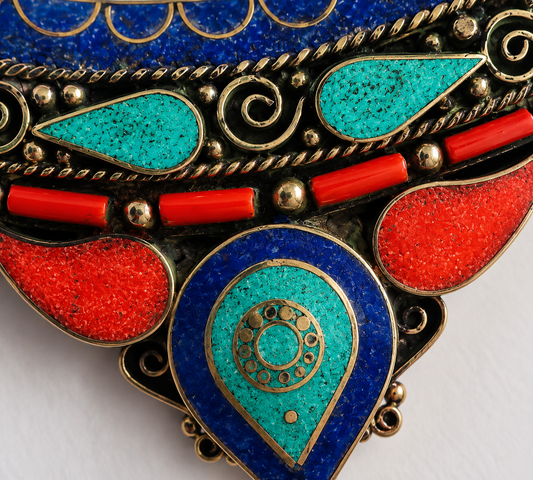
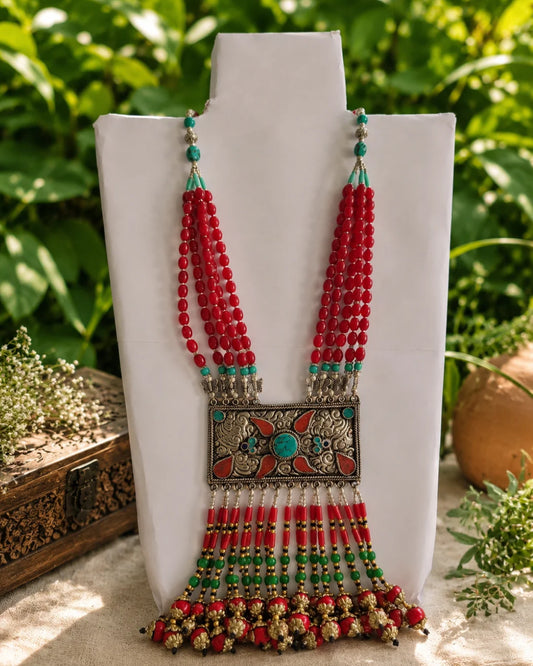
The most iconic elements of Tibetan jewellery are turquoise and red coral. In Tibetan culture, turquoise is revered as a stone of the sky and water, symbolising good fortune, protection and health. It is believed to absorb negativity and shield the wearer from harm. Its colour, ranging from deep robin's egg blue to greenish-blue, is intimately connected to the powerful natural landscape of the Himalayas. Red coral, often sourced via ancient trade routes, represents energy, vitality and the life force. Together they create a vibrant, auspicious contrast found in almost all significant pieces, from large matrix pendants to delicate earrings.

Symbols of Faith: The Gau and the Mantra
A central item in Tibetan adornment is the gau, a portable shrine or amulet box, as illustrated in the foreground of our image. These intricate silver or brass containers, often studded with gems, are designed to hold sacred items: a small Buddha statue, blessed herbs, prayer scrolls or a written mantra. The gau is worn close to the heart, offering constant spiritual protection and reminding the wearer of their faith.
Beyond the physical form, Tibetan jewellery frequently incorporates powerful symbols, such as the dorje (thunderbolt or diamond), symbolising the indestructible nature of reality, and the endless knot, representing the interconnectedness of all things and the Buddha's infinite wisdom. The sacred mantra Om Mani Padme Hum is often engraved into rings and spinning prayer wheel pendants, turning the jewellery into a tool for active devotion.
The Artisan's Hand
The unique aesthetic of Tibetan jewellery comes from its rugged, handcrafted nature. Tibetan silversmiths are masters of repoussé (hammering metal into relief from the reverse side) and filigree (intricate wirework). The metal — most often silver or paktong, a nickel-silver alloy — is rarely polished to a high shine. Instead it carries a warm, oxidised patina that highlights the detailed work, giving the pieces an antique, lived-in feel. This rustic elegance ensures that no two pieces are identical, preserving the energy and skill of the artisan.
A Living Tradition
Tibetan jewellery connects the wearer to a profound spiritual lineage. Its vibrant colours, rugged textures and sacred symbols transcend mere fashion, offering a meaningful way to honour an ancient culture and carry its blessings of protection and wisdom into the modern world.